
Hair Fall Treatment & Shedding Assessment
Finding more hair than usual in the shower, on the pillow or while brushing can be distressing. But hair fall is a symptom rather than a diagnosis.
Some patients are experiencing excessive shedding. Others are developing progressive follicular miniaturisation. Some have both.
Determining which process is occurring is the starting point for effective treatment.
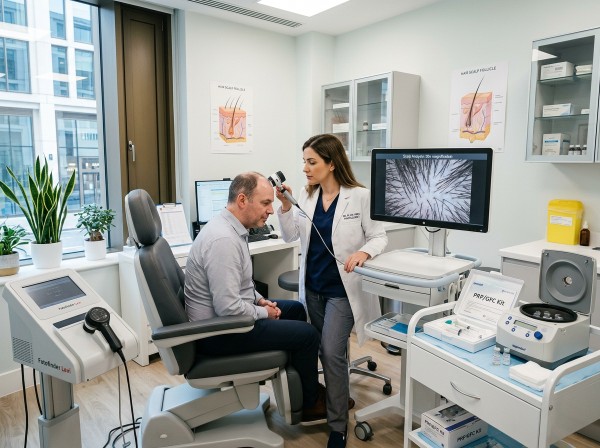
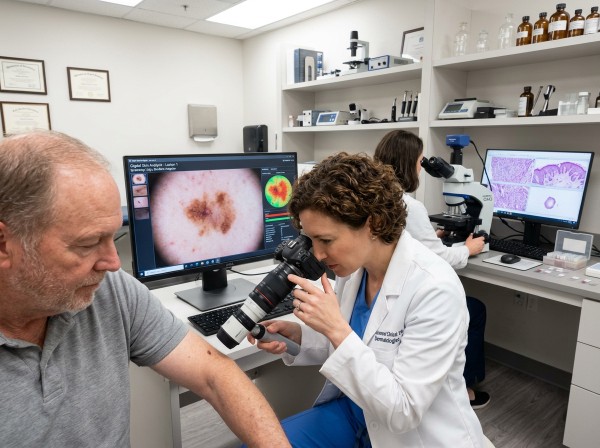
“Hair fall is the clue, not the complete diagnosis. Identifying whether follicles are shedding, miniaturising, or inflamed dictates genuine recovery.”
Dr. Yaksh Oza approaches hair fall through methodical follicular diagnostics, identifying the precise physiological triggers rather than prescribing generic hair supplements.
Understanding the Hair-Growth Cycle
Every scalp follicle repeatedly passes through different phases.
Because individual follicles cycle independently, normal scalp hair does not shed simultaneously. Problems arise when this balance changes.
Telogen Effluvium: When More Hairs Enter the Resting Phase
One of the most common causes of sudden diffuse hair shedding is telogen effluvium.
A physiological stressor can cause a larger-than-usual number of follicles to transition from active growth toward the resting phase. The resulting shedding often becomes noticeable weeks to months after the original trigger.
Potential triggers include:
Sometimes the trigger has already resolved by the time hair shedding becomes obvious.
Hair Fall Can Also Reveal Another Hair Disorder
Excessive shedding can coexist with androgenetic alopecia. A patient may therefore notice sudden hair fall but also have underlying progressive follicular miniaturisation that had previously gone unnoticed.
Other causes of hair loss include alopecia areata, inflammatory scalp disorders, traction alopecia and scarring alopecias.
Important Clinical Warning: This is why simply prescribing supplements for every patient with hair fall can miss the actual diagnosis.
How We Assess Hair Fall
Evaluation may include:
Physical Examination: Examination may include a hair-pull test and trichoscopy, which allows magnified assessment of follicular openings, shaft diameter and miniaturisation.
Blood Investigations
Laboratory testing is individualised.
Depending on history and examination, investigations may assess factors such as blood count, iron status, thyroid function or other nutritional and metabolic abnormalities.
Testing should be targeted rather than automatically ordering every possible vitamin level.
Treatment
Treatment depends on the cause.
Reversible Trigger Correction
Where a reversible trigger is responsible, correcting that trigger and allowing the hair cycle to normalise may be the main intervention.
Targeted Nutritional Supplementation
Nutritional supplementation is useful when a relevant deficiency exists. Routine “hair vitamins” are not a substitute for diagnosis.
Coexisting Follicular Miniaturisation Management
When telogen effluvium occurs alongside pattern hair loss, treatment may also need to address follicular miniaturisation.
Medical Hair-Growth Treatments
Minoxidil or other hair-growth treatments may be considered in selected patients depending on the underlying diagnosis.
Frequently Asked Questions
How much daily hair fall is normal?
Some shedding is part of the normal cycle. Exact hair counting is rarely necessary. A sustained increase from your personal baseline or visible loss of density is more clinically useful.
Can stress cause hair fall?
Yes, significant physiological or psychological stress can contribute to telogen effluvium, but other causes should not automatically be ignored.
Does low iron cause hair loss?
Iron deficiency can contribute to shedding in some patients and should be corrected when identified.
Should I take biotin?
Biotin deficiency is uncommon. Routine high-dose supplementation is not necessary for most patients and can interfere with certain laboratory tests.
Does telogen effluvium recover?
When the trigger is identified and resolved, follicles can usually return to normal cycling, although visible recovery takes time because hair grows slowly.
When should I worry?
Seek assessment for persistent shedding, bald patches, scalp pain or inflammation, loss of eyebrows or body hair, progressive thinning or signs of scarring.
Hair Fall Is the Clue. Diagnosis Is the Treatment Plan.
Instead of automatically prescribing supplements or serums, we determine whether you are experiencing temporary shedding, progressive miniaturisation or another form of alopecia.
Book a Hair & Scalp Consultation