
Psoriasis Treatment
Psoriasis is a chronic inflammatory condition in which the immune system drives inflammation and changes in the skin. It can also affect the nails and, in some people, the joints.
It commonly causes clearly defined, inflamed patches of skin with scaling, known as plaques. However, its appearance can vary depending on the type of psoriasis and the area affected.
Psoriasis is not contagious. You cannot catch it from another person or pass it on through physical contact.
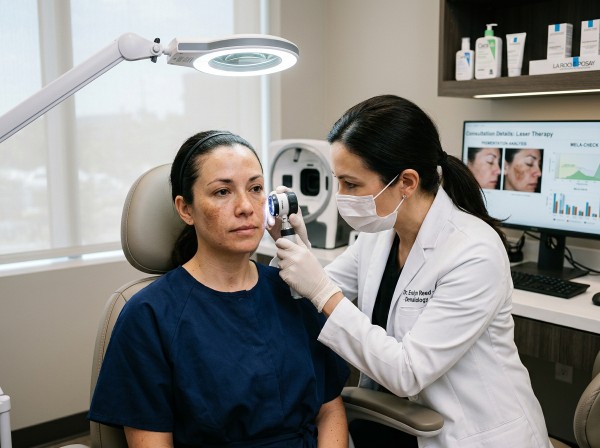
“Dr. Yaksh Oza considers both the visible signs of psoriasis and its effect on your comfort, daily life and overall health. Treatment is tailored to the areas involved, the severity of your symptoms and your individual needs.”
Our approach focuses on achieving effective clearance, restoring comfort, and maintaining long-term skin health.
Types of Psoriasis and Areas Affected
Psoriasis can take several forms and affect different parts of the body. These include:
Plaque psoriasis
Clearly defined, inflamed patches with scaling.
Scalp psoriasis
Psoriasis affecting the scalp.
Guttate psoriasis
Smaller, scattered spots of psoriasis.
Flexural or inverse psoriasis
Psoriasis affecting skin folds.
Palm and sole psoriasis
Psoriasis involving the palms of the hands or soles of the feet.
Pustular forms
Psoriasis associated with pus-filled lesions.
Nail psoriasis
Changes affecting the fingernails or toenails.
Each form can present different treatment challenges. The most suitable approach depends on both the type of psoriasis and its location.
Why Does Psoriasis Occur?
Psoriasis develops when abnormal immune activation speeds up skin-cell turnover and promotes inflammation. A genetic predisposition plays an important role.
Flares may be triggered or worsened by factors such as:
These influences vary from person to person. Understanding your history and the pattern of your flares helps us identify factors that may be relevant to your care.
Beyond the Skin
Psoriasis can affect much more than the appearance of your skin.
Some people develop psoriatic arthritis, an associated inflammatory condition that may cause joint pain, stiffness, swelling or inflammatory back symptoms. It is important to mention these symptoms during your consultation, even if they seem unrelated to your skin.
Psoriasis can also be associated with other health conditions. A thorough assessment therefore considers your overall health as well as the visible plaques.
How We Diagnose Psoriasis
Psoriasis is usually diagnosed by examining your skin and reviewing your symptoms and medical history. Occasionally, a skin biopsy may be needed if the appearance is unusual or the diagnosis is uncertain.
During your assessment, we consider:
Coverage
How much of the skin is affected
Distribution
Which areas are involved
Symptoms
The symptoms you experience
Nails
Any nail changes
Joints
Joint pain, stiffness, swelling or back symptoms
History
Previous treatments and their results
Impact
The effect on your daily life and wellbeing
Health
Other health conditions relevant to treatment
The extent of psoriasis is only one part of this assessment. Its location and impact on your life also help guide treatment decisions.
Treatment Options for Psoriasis
Treatment is chosen according to your disease pattern, symptoms, medical history and response to previous care.
Topical Therapy
Mild or localised psoriasis can often be managed with medication applied directly to the skin.
Options may include topical corticosteroids, vitamin D analogues, treatments that help soften and remove excess scale—known as keratolytics—and other therapies selected for the area being treated.
Phototherapy
Controlled medical ultraviolet treatment, known as phototherapy, may be useful for selected patients with more extensive psoriasis.
It is delivered as a supervised treatment, with suitability assessed according to your condition and individual circumstances.
Systemic Treatment
Psoriasis that is more extensive, resistant to treatment or having a substantial effect on daily life may require medicines that work throughout the body.
Before recommending systemic treatment, we consider disease severity, medical history, laboratory assessments, reproductive considerations such as pregnancy plans, and any associated health conditions.
Biologic Therapy
Biologic medicines target specific inflammatory pathways involved in psoriasis. They can provide substantial disease control for appropriately selected patients with moderate-to-severe disease.
Treatment requires a medical assessment, screening before starting and ongoing monitoring.
The decision to use a biologic takes account of your symptoms, treatment history and overall medical circumstances.
Scalp and Nail Psoriasis
Scalp and nail psoriasis can be particularly persistent and may not respond adequately to routine treatment. These areas often need a dedicated treatment strategy.
Nail involvement is also relevant to the wider assessment because it can coexist with psoriatic arthritis. Any nail changes and accompanying joint symptoms should be discussed during your consultation.
Frequently Asked Questions
Is psoriasis contagious?
No. Psoriasis does not spread from person to person through touch or close contact.
Can psoriasis be permanently cured?
Current treatments can achieve excellent control in many patients. However, psoriasis is generally a long-term condition, and symptoms can return even after a period of improvement.
Does stress cause psoriasis?
Stress is not the sole cause of psoriasis, but it can trigger or worsen flares in some people. Its role varies between individuals.
Can psoriasis affect the joints?
Yes. Some people with psoriasis develop psoriatic arthritis. Joint pain, stiffness, swelling or inflammatory back symptoms should be discussed as part of your assessment.
Are biologics only for extremely severe psoriasis?
Biologics are considered according to disease severity, its impact on your life, previous treatment response and your individual medical circumstances. Decisions are not based solely on how the skin looks.
Can diet cure psoriasis?
No specific diet is a universal cure for psoriasis. However, supporting overall health and managing weight where appropriate can be useful parts of comprehensive care.
Control Psoriasis Beyond the Surface
Living with recurring psoriasis can be frustrating, particularly when it affects uncomfortable areas or interferes with everyday life.
An effective treatment plan considers the severity of your condition, the areas affected, your nails and joints, and your overall health. Our aim is to help you achieve better control with care that reflects how psoriasis affects you.
Book a Psoriasis Consultation